Wednesday, 28 September 2016

NYMEX crude holds gains in Asia, Brent down after OPEC deal on output - Sean Seshadri Trading Institute

U.S. crude oil prices held gains in Asia on Thursday as OPEC agreed to curbs on production with details apparently still under discussion and investors noted U.S. inventory data from the Department of Energy.
U.S. West Texas Intermediate (WTI) crude for November delivery on the New York Mercantile Exchange rose 0.15% to $47.12 a barrel. Brent crude for December delivery on the Intercontinental Exchange fell 0.16% to $49.16 a barrel.
© Reuters.  NYMEX up in Asia, Brent down
OPEC surprised markets Wednesday and agreed to production curbs under a formula to cut output to a range of 32.5 million to 33 million barrels of oil per day from 33.4 million.
Under the terms, Saudi Arabia, the world's top producer, is expected to cut output by 350,000 barrels a day, according to reports.
Overnight, oil prices dipped on Wednesday as data showing a large build in U.S. gasoline inventories prompted a selloff that killed an early rally on a surprise drop in U.S. crudestockpiles for a fourth straight week.
U.S. crude inventories fell by 1.9 million barrels in the week to Sept. 23, compared with analyst expectations for an increase of 3.0 million barrels, data from the Energy Information Administration showed. Gasoline stocks rose by 2.0 million barrels, far more than the gain of 178,000 barrels forecast in a Reuters poll.

NYMEX crude lifted further in Asia by API estimates, OPEC meet looms - Sean Seshadri

 Crude oil prices gained further in Asia on Wednesday as industry data showed a continued demand trend for crude and refined product stockpiles and an OPEC meeting later in the day looms.
Crude oil for November delivery on the New York Mercantile Exchange rose 0.60% to $44.94 a barrel.
The American Petroleum Institute said crude inventory estimates showed a drop of 750,000 barrels last week, coming on th heels of a substantial 7.5 million barrel draw previously. Gasoline stocks dropped 3.7 million barrels, the fourth successive week of draws above 2.0 million, while distillates fell by 300,000 barrels. Inventories at Cushing eased by 800,000 barrels.
The figures come ahead of more closely-watched data from the U.S. Department of Energy on Wednesday.
© Reuters.  NYMEX crude gains further in Asia
Overnight, oil prices plunged nearly 3% during North American hours on Tuesday, extending overnight losses, after both Saudi Arabia and Iran played down expectations for a deal to freeze or cut oil production at the closely watched informal OPEC meeting on Wednesday.
Oil ministers from both countries said on Tuesday that talks among OPEC and non-OPEC oil producers in Algiers are "consultative," casting doubt on the chances of any policy decision during the meeting.
On the ICE Futures Exchange in London, Brent oil for December delivery ended at $46.76 a barrel.
On Monday, London-traded Brent futures surged $1.45, or 3.12%, amid hopes global oil producers will make progress on a deal to limit production at an informal meeting tentatively scheduled for Wednesday afternoon.
OPEC members, led by Saudi Arabia and other big Middle East crude exporters, such as Iran and Iraq, will meet non-OPEC producer Russia at the International Energy Forum in Algeria on Wednesday at 14:00GMT (10:00AM ET).
According to market experts, chances that the meeting would yield any action to reduce the global glut appeared minimal. Instead, most believe that oil producers will continue to monitor the market and possibly postpone freeze talks to the official OPEC meeting in Vienna on November 30.
An attempt to jointly freeze production levels earlier this year failed after Saudi Arabia backed out over Iran's refusal to take part of the initiative, underscoring the difficulty for political rivals to forge consensus.

Tuesday, 27 September 2016

Sean Seshadri Trading - Oil prices slip on profit-taking as investors await U.S. stockpile data

Crude futures slipped in Asian trade on Tuesday as investors took profits after prices climbed more than 3 percent in the previous session.
The dollar was also weighing on oil prices after rising against a basket of currencies, suggesting markets were judging Democrat Hillary Clinton as the winner in the first U.S. presidential debate with Republican candidate Donald Trump.
A stronger greenback makes commodities like crude that trade on a dollar basis more expensive for consumers that pay in other currencies.
Expectations of a build in U.S. crude stockpiles last week, according to a Reuters poll, also pressured prices amid concerns of a global oversupply.
© Reuters. A pumpjack drills for oil in the Monterey Shale
Major oil producers are gathering in Algeria for a three-day meeting that could see moves to cut or freeze oil output in an effort to support oil prices.
The Organization of the Petroleum Exporting Countries and other oil producers led by Russia are meeting informally on the sidelines of the International Energy Forum in Algeria from Sept. 26-28.
But markets remained skeptical that producers would reach a deal, said Michael McCarthy, chief market strategist at Sydney's CMC Markets.
"The dominant news for investors is U.S. inventory data unless we see something surprising out of Algiers," he said.
The reversal in oil prices during the Asian time zone on Tuesday meant investors were generally profit-taking, McCarthy said.
Brent crude futures slipped 27 cents to $47.08 a barrel as of 0639 GMT after closing up $1.46, or 3.2 percent in the previous session.
U.S. West Texas Intermediate (WTI) crude fell 13 cents to $45.80 a barrel, after rising $1.45, or 3.3 percent, in the previous session.
U.S. commercial crude oil stocks likely rose by an average of 2.8 million barrels to 507.4 million barrels in the week to Sept. 23, reversing three weeks of unexpected drawdowns, a Reuters poll of seven analysts showed.
That came ahead of weekly inventory reports from industry group the American Petroleum Institute (API) that will be released later on Tuesday, and the U.S. Department of Energy's Energy Information Administration (EIA) that will be published on Wednesday.
OPEC member Iran on Monday downplayed the chances of oil producers clinching an output-restraint deal although several other producers, including the United Arab Emirates and Algeria, hoped measures could be agreed to curb output.
"With the market still unconvinced an agreement will be reached, any signs that OPEC will cap output could see prices surge higher," said ANZ in a market report on Tuesday.

Monday, 26 September 2016

Sean Seshadri - Gold / Silver / Copper futures - Weekly Outlook: September 26 - 30

Gold prices edged lower on Friday, but notched the strongest weekly advance in almost two months after the Federal Reserve held off on raising interest rates and scaled back the number of rate hikes it expects next year.
The precious metal is sensitive to moves in U.S. rates, which lift the opportunity cost of holding non-yielding assets such as bullion. A gradual path to higher rates is seen as less of a threat to gold prices than a swift series of increases.
Gold for December delivery on the Comex division of the New York Mercantile Exchange dipped $3.00, or 0.22%, to settle at $1,341.70 a troy ounce by close of trade. On Thursday, prices rallied to $1,347.80, the most since September 7.
For the week, the yellow metal ended with a gain of $31.50, or 2.34%, the best performance since the week ended July 29.
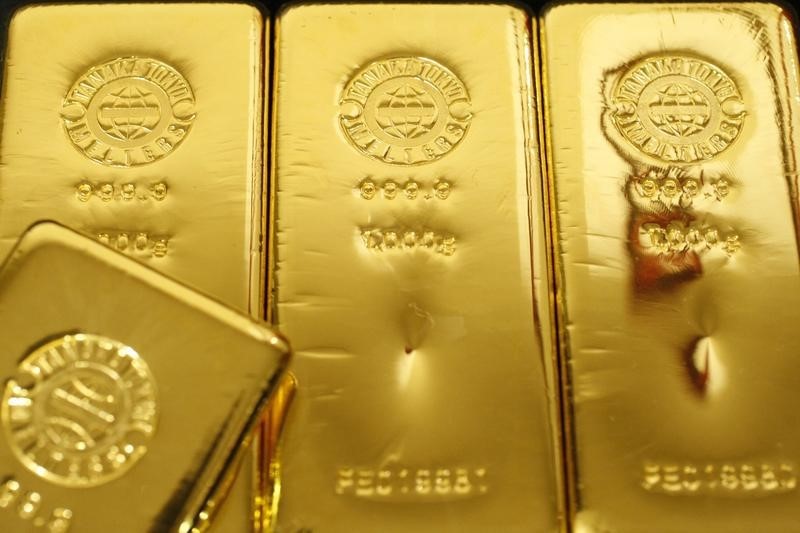
© Reuters.  Gold ends lower, but books best weekly gain since July after Fed
The Fed left interest rates unchanged at the conclusion of its policy meeting on Wednesday, but hinted that a hike could come in December if the job market continued to improve.
At the same time, the U.S. central bank also cut the number of rate hikes it expects next year and in 2018, according to the median projection of forecasts released with its post-meeting statement.
The Fed has policy meetings scheduled in early November and mid-December. Economists believe policymakers would avoid a rate hike in November in part because the meeting falls just days before the U.S. presidential election.
Markets are currently pricing in a 13% chance of a rate hike at November's meeting, according to Investing.com's Fed Rate Monitor Tool. For December, odds stood at around 55%.
The U.S. dollar index, which measures the greenback's value against a basket of six major currencies, ended the week at 95.40, not far from the prior day's two-week low of 94.94.
The index lost 0.75% on the week as markets remain unconvinced that U.S. policymakers intend to tighten policy in the coming months.
Dollar weakness usually benefits gold, as it boosts the metal's appeal as an alternative asset and makes dollar-priced commodities cheaper for holders of other currencies.
Also on the Comex, silver futures for December delivery declined 28.9 cents, or 1.44%, on Friday to settle at $19.81 a troy ounce. The contract rose to $20.14 on Thursday, a level not seen since September 7. On the week, silver jumped 96.5 cents, or 5.03%.
Elsewhere in metals trading, copper for December delivery eased up 0.6 cents, or 0.3%, on Friday to end at $2.201 a pound after touching a daily peak of $2.206, the most since August 2.
For the week, New York-traded copper prices surged 5.5 cents, or 1.91%, the third weekly gain in a row, amid indications that China's economy is regaining strength and indications that global central banks will remain accommodative.
In the week ahead, market players will be turning their attention to fresh comments from Federal Reserve Chair Janet Yellen amid ongoing uncertainty over the timing of the next U.S. rate hike.
Meanwhile, investors will be focusing on a pair of speeches from European Central Bank President Mario Draghi for fresh hints on whether the ECB will step up monetary stimulus in the coming months to boost inflation and prop up the economy.
In addition, remarks by Bank of Japan Governor Haruhiko Kuroda will be eyed in wake of last week's decision by the BOJ to modify its policy framework.
Another big event for markets could be the first U.S. presidential debate on Monday.
Ahead of the coming week, Investing.com has compiled a list of these and other significant events likely to affect the markets.
Monday, September 26
In the euro zone, the Ifo Institute is to report on German business climate.
Swiss National Bank Chairman Thomas Jordan is to speak at an event in Geneva.
European Central Bank President Mario Draghi is to testify before the Committee on Economic and Monetary Affairs of European Parliament, in Brussels.
Bank of Canada Governor Stephen Poloz is to speak in Washington.
The U.S. is to release data on new home sales.
Later in the day, the market will turn its attention to the first televised U.S. presidential debate between Democratic nominee Hillary Clinton and Republican hopeful Donald Trump.
Tuesday, September 27
The U.S. is to release private sector data on consumer confidence.
Federal Reserve Vice Chair Stanley Fischer is due to speak at an event in Washington, DC.
Wednesday, September 28
ECB President Draghi is to speak about current developments in the euro area at the German Bundestag, in Berlin.
The U.S. is to publish data on durable goods orders.
Fed Chair Janet Yellen is scheduled to testify before the House Financial Services Committee on regulation and supervision, while St. Louis Fed chief James Bullard is to speak in St. Louis.
Thursday, September 29
BoJ Governor Haruhiko Kuroda is to speak in Tokyo.
Germany is to publish preliminary inflation data and a report on unemployment change.
The U.S. is to publish final figures on second quarter growth, the weekly report on initial jobless claims and data on pending home sales.
Fed Chair Janet Yellen is to speak, via satellite, at an event in Kansas.
Friday, September 30
Japan is to release data on inflation and household spending.
China is to publish its Caixin manufacturing index.
Germany is to release data on retail sales.
The U.K. is to report on the current account and publish revised data on second quarter growth.
The euro zone is to release preliminary data on consumer inflation.
Canada is to publish data on economic growth.
The U.S. is to round up the week with data on personal income and spending, a report on business activity in the Chicago region and revised data on consumer sentiment.

Friday, 23 September 2016

Gold prices turn lower amid profit-taking - Sean Seshadri

Gold prices turned lower on Friday, as investors chose to lock in profits from the previous metal’s climb to a two-and-a-half week high overnight as the Federal Reserve’s decision to leave interest rates unchanged continued to support.
On the Comex division of the New York Mercantile Exchange, gold futures for December delivery were down 0.45% at $1,338.65.
The December contract ended Thursday’s session 1.00% higher at $1,344.70 an ounce.
Futures were likely to find support at $1,328.00, the low from September 9 and resistance at $1,345.40, the high from September 8.
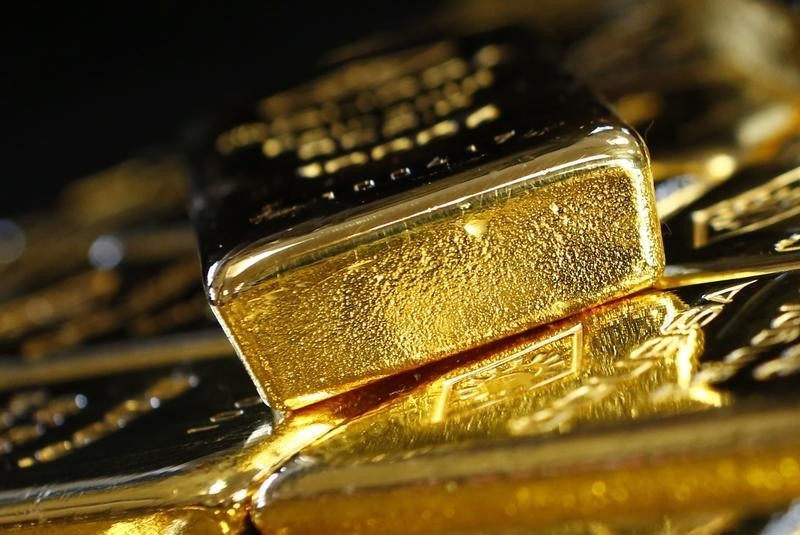
© Reuters.  Gold loses ground after hitting nearly 2-week highs
Gold prices rallied after the Fed decided on Wednesday to hold interest rates and projected a less aggressive rise in interest rates next year and in 2018.
However, the U.S. central bank signaled that it could tighten monetary policy before the end of the year if the job market continued to improve.
Gold is sensitive to moves in U.S. rates. A gradual path to higher rates is seen as less of a threat to gold prices than a swift series of increases.
Elsewhere in metals trading, silver futures for December delivery tumbled 0.93% to $19.907 a troy ounce, while copper futures for December delivery slipped 0.11% to $2.192 a pound.