Monday, 7 November 2016

Oil prices steady ahead of U.S. election, weak China data weighs - Sean Seshadri

Oil prices were stable on Tuesday as financial investors and traders were cautiously positioning themselves for a win by Hillary Clinton in the U.S. presidential elections.
U.S. West Texas Intermediate (WTI) crude futures were at $44.97 at 0610 GMT, virtually flat from their previous settlement. The contract gained nearly 1.9 percent the previous session.
International Brent crude prices were up 8 cents at $46.23 per barrel.
"Investors piled back into the energy sector," ANZ bank said, with polls putting Clinton ahead of her Republican competitor Donald Trump in Tuesday's election. Clinton is seen by investors as offering greater certainty and stability.
© Reuters. A worker takes oil samples from a well at Gazpromneft-owned Yuzhno-Priobskoye oil field outside Khanty-Mansiysk, Russia
In China, oil data released on Tuesday was weak, albeit coming down from high levels.
"Chinese oil imports ... eased slightly in October but remained at elevated levels (on year)," ANZ bank said on Tuesday following the data release.
China, which vies with the United States for top spot as the biggest crude importer, bought 6.78 million barrels of oil from abroad in October, down 12.9 percent from the previous month and one of the lowest volume this year on a daily basis.
The country's refined oil product exports jumped 24 percent on a year earlier, as the nation produced more fuel than it could absorb.
Crude prices were held back by lingering doubts over the ability of oil producers to agree on a planned output cut to prop up a market which has been dogged by two years of oversupply.
The chief executive of U.S. oil giant Exxon Mobil (NYSE:XOM), Rex Tillerson said on Monday that global oil supplies have exceeded demand by 1 million to 2 million barrels per day since the start of 2015.
In physical oil markets, U.S. pipeline companies with operations at the heart of the country's commercial oil industry at Cushing, Oklahoma, restarted on Monday after an earthquake late on Sunday triggered safety shutdowns.

Tuesday, 25 October 2016

Brent, NYMEX fall in Asia as API crude build larger than expected - Sean Seshadri

Crude prices heldp weaker in Asia on Wednesday after industry figures showed a major build in U.S. crude stockpiles.
Crude oil for December delivery on the New York Mercantile Exchange dropped 1.30% to $49.31 a barrel. Brent oil for December delivery on the ICE Futures Exchange in London fell 1.12% to $50.22 a barrel.
The American Petroleum Institute (API) said late Tuesday that crude inventories rose 4.8 million barrels last week, larger than expected, and following a 3.8 million draw the previous week. Stocks at Cushing eased 2.3 million barrels, API said, as an outage of a pipeline feeding the facility continues to crimp flows. Gasoline inventories recorded a build of 1.7 million barrels, and distillates fell 900,000 barrels.
Official data from the Energy Information Administration will be released Wednesday, amid forecasts for an oil-stock increase of 800,000 barrels.
Overnight, oil prices were under pressure in North American trade on Tuesday, reversing earlier gains as fading expectations of a coordinated production cut among major global oil producers and a stronger U.S. dollar weighed.
© Reuters.  NYMEX, Brent weaker on API figures
Iraq, the second biggest producer in OPEC after Saudi Arabia, recently said it wanted to be exempt from any output freeze deal among major global producers.
Global oil prices have been under pressure in recent days amid market skepticism over the implementation of a planned deal by OPEC to limit production.
The 14-member oil group reached an agreement to cap output to a range of 32.5 million to 33.0 million barrels per day in talks held on the sidelines of an energy conference in Algeria late last month.
However, OPEC said it won’t finalize details on individual output quotas until its next official meeting in Vienna on November 30, when an invitation to join the deal could also be extended to non-OPEC countries such as Russia.

Monday, 24 October 2016

Gold little changed, strong U.S. dollar still weighs - Sean Seshadri

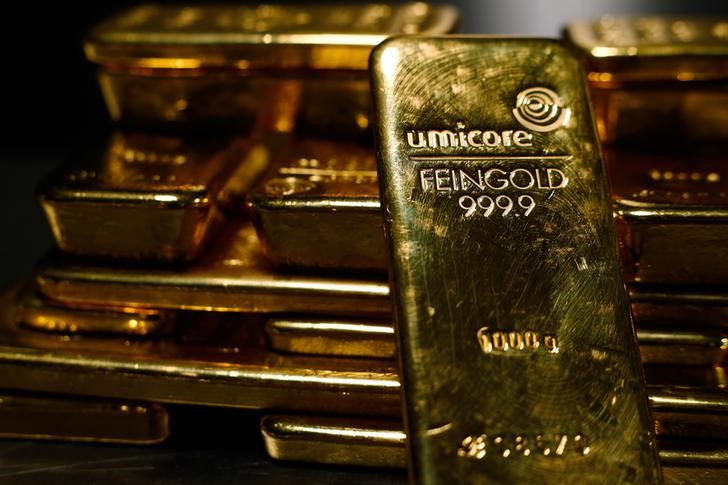
Gold prices were little changed on Monday, although a broadly stronger U.S. dollar continued to weigh on the precious metal.
On the Comex division of the New York Mercantile Exchange, gold futures for December delivery were little changed at $1,267.25.
The December contract ended Friday’s session little changed at $1,267.70 an ounce.
Futures were likely to find support at $1,268.60, the low from October 21 and resistance at $1,271.50, the high from October 20.
© Reuters.  Gold holds steady amid sustained U.S. rate hike speculation
Gold prices remained under pressure as expectations for a U.S. rate hike before the end of the year continued to lend broad support to the greenback.
The dollar was boosted after New York Fed President William Dudley said last week that the U.S. central bank will likely raise interest rates later this year if the economy remains on its current trajectory.
On Friday, San Francisco Fed President John Williams said that "this year would be good" for a rate hike.
Growing expectations that Hillary Clinton will win the U.S. presidential election have also added to the view that a December rate hike is likely.
The U.S. dollar index, which measures the greenback’s strength against a trade-weighted basket of six major currencies, was steady at 98.60, just off a fresh eight-month peak of 98.82 hit overnight.
A stronger U.S. dollar usually weighs on gold, as it dampens the metal's appeal as an alternative asset and makes dollar-priced commodities more expensive for holders of other currencies.
Elsewhere in metals trading, silver futures for December delivery advanced 0.77% to $17.627 a troy ounce, while copper futures for December delivery gained 0.45% to $2.098 a pound.

Thursday, 20 October 2016

Asia's oil markets are tightening as China cuts output, fuel stocks dwindle - Sean Seshadri

From sharp cuts to Chinese oil production to falling inventories of refined fuel products, signs are mounting that Asia's oil markets are slowly returning to balance.
Global inventories of refined products - made up from light and middle distillates like gasoline and diesel, as well as residual fuel such as fuel oil - have all fallen since the beginning of the month. They are now at or below levels seen this time last year, data in Thomson Reuters Datastream shows.
The drawdowns come after China, Asia's biggest oil consumer and a top-5 global producer, this week reported a 9.8 percent fall in output for September, amounting to one of the deepest cuts on record.
© Reuters. A worker prepares to transport oil pipelines to be laid for Pengerang Gas Pipeline Project in Johor
The falling stocks in most oil trading hubs, including Singapore, Europe's ARA (Amsterdam, Rotterdam, Antwerp), and in the United States, as well as China's declining production, are signs of a market coming closer into balance following two years of consistent crude and refined product oversupply.
"The oil products market is in the midst of rebalancing – it started in the U.S. and Europe a few months back, and in Asia the rebalancing is starting to show," said Nevyn Nah of energy consulting firm Energy Aspects.
Despite a slight increase over the past week, Singapore's refined product stocks have fallen from over 58 million barrels last May to below 50 million barrels, according to government data. [O/SING]
"After two years of oversupply and sharply rising inventories, inventories may have peaked as supply and demand comes back into balance," Neil Beveridge of Bernstein Energy said on Friday in a note to clients.
Analysts said the tighter markets were a result of both strengthening demand and tightening supplies.
FROM GLUT TO SQUEEZE?
A tightening fuel market is also visible in Singapore's refinery margins, which have improved despite rising feedstock crude prices.
Gasoline profits have soared from just $1.70 per barrel in July to almost $10, while overall Singapore refinery margins started picking up in August and have since jumped from $2.50 a barrel to around $6.20.
"The net result of these developments implies that prices could have further to run as markets tighten," said Bernstein's Beveridge, who expected crude prices to average $60 per barrel in 2017 and $70 a barrel in 2018.
Given strong demand, especially in Asia, and tightening supplies, "there could be a substantial supply shortfall in 2017 which could go a long way to draining inventories," he added.
Yet for the moment, traders say Asia's markets are still some way off a squeeze.
China's gasoline and diesel exports, which contributed heavily to Asia's refined product glut, jumped again in September, customs data showed on Friday, as its refiners continue to produce more fuel than China consumes.
And with the refinery maintenance season coming to an end soon, refined product supplies will soon start to pick up.

Wednesday, 19 October 2016

Oil prices dip after strong rally, but sentiment remains confident - Sean Seshadri

Oil prices dipped on Thursday on profit taking after markets rallied the previous day due to a draw in U.S. stocks and an expectation of an OPEC-led cut in production.
U.S. West Texas Intermediate (WTI) crude oil futures CLc1 were trading at $51.44 per barrel at 0122 GMT, down 16 cents from their last close.
International Brent crude futures LCOc1 were trading at $52.64 per barrel, down 3 cents.
© Reuters.  Oil prices dip after strong rally, but sentiment remains confident
Traders said that the price dips were a result of profit taking following a rally the previous day, which saw WTI settle at a 15 month high, fuelled by a reduction in U.S. crude stocks by 5.2 million barrels in the week ended Oct. 14 to 468.7 million barrels. prices continued to rise overnight on optimism over OPEC supply restraint and weaker-than-expected inventories," ANZ bank said on Thursday.
The overall mood in oil markets remained confident, with most analysts expecting further increases.
Reuters technical commodity analyst Wang Tao said U.S. oil is expected to break a resistance zone of $51.67-$52.11 per barrel, and then rise towards $52.78, while Brent oil may stabilize around a support at $52.49 per barrel and then retest a resistance at $53.45. Organization of the Petroleum Exporting Countries (OPEC) plans to meet on Nov. 30 and hopes to decide on a half a million to one million barrels per day oil production cut, and the producer cartel hopes that non-OPEC exporters, especially Russia, will cooperate.

Gold steady, but gains capped by stronger equities - Sean Seshadri Trading Tampa

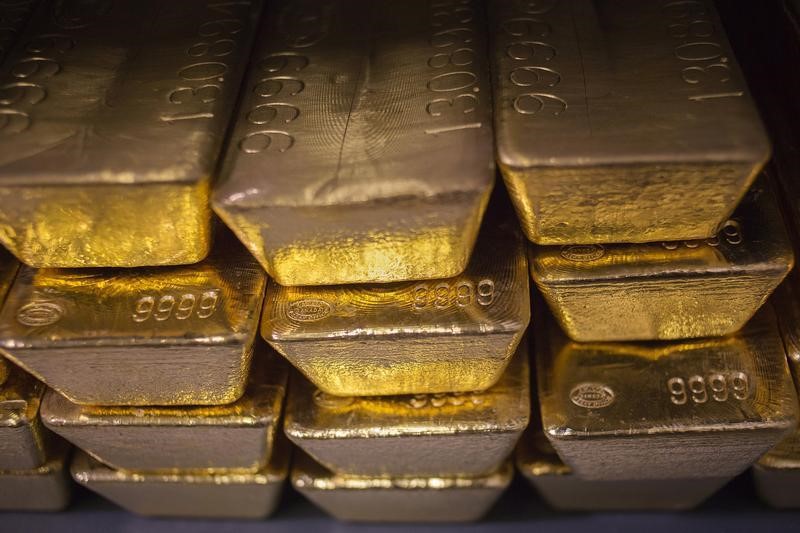
Gold prices were steady on Wednesday, after gains in the previous session but fresh gains were held in check amid a rise in equity markets after data indicating that China’s economy has stabilized.
Gold for December delivery on the Comex division of the New York Mercantile Exchange was last at $1,262.45 a troy ounce.
Asian shares notched up a second day of gains on Wednesday after data showing thatChina’s economy expanded 6.9% in the third quarter, matching economists’ forecasts.
The data bolstered market sentiment, curbing safe haven demand for the precious metal.
© Reuters.  Gold steady, but gains capped by stronger equities
The dollar continued to hold below seven-month highs against the other major currencies after data on Tuesday showing that while the cost of living in the U.S. rose at the fastest pace in five months in September the rate of underlying inflation moderated.
The U.S. dollar index, which measures the greenback's value against a basket of six major currencies, was at 97.85. Gold is priced in U.S. dollars and becomes cheaper to holders of other currencies when the dollar weakens.
The inflation data fueled speculation over whether the world's largest economy is strong enough to withstand an increase in borrowing costs before the end of the year.
Rising inflation would be a catalyst to push the Fed toward raising interest rates.
Markets are currently pricing in around a 64% chance of a rate hike at December's meeting, according to Investing.com's Fed Rate Monitor Tool.
On Monday, Fed Vice Chair Stanley Fischer said the U.S. central bank is "very close" to its employment and inflation targets, while Boston Fed President Eric Rosengren said the current levels of jobs and inflation support the case for a rate increase soon.
Gold is sensitive to moves in U.S. rates, which lift the opportunity cost of holding non-yielding assets such as bullion.
Also on the Comex, silver futures for December delivery were at $17.61 a troy ounce during morning hours in London, while copper futures traded at $2.101 a pound.

Friday, 14 October 2016

Gold prices hold steady, eyes on U.S. data - Sean Seshadri Trading Florida

Gold prices held steady on Friday, as a higher U.S. dollar weighed on the precious metal although investors remained cautious ahead of U.S. retail sales and consumer sentiment data, as well as a speech by Federal Reserve Chair Janet Yellen due later in the day.
On the Comex division of the New York Mercantile Exchange, gold futures for December delivery were little changed at $1,257.35.
The December contract ended Thursday’s session 0.30% higher at $1,257.60 an ounce.
Futures were likely to find support at $1,251.70, Wednesday’s low and resistance at $1,265.30, the high from October 6.
© Reuters.  Gold prices little changed as U.S. dollar regains ground
Gold prices had regained some ground on Thursday thanks to a weaker U.S. dollar, but the greenback moved back higher on Friday morning.
The dollar was still supported by the minutes of the Federal Reserve’s September policy meeting released on Wednesday, which showed that several voting members of the policy committee judged a rate hike would be warranted "relatively soon" if the U.S. economy continued to strengthen.
Gold is sensitive to moves in U.S. rates, which lift the opportunity cost of holding non-yielding assets such as bullion.
The U.S. dollar was also helped by data on Thursday showing that U.S. initial jobless claims held steady at 246,000 in the week ending October 8. Analysts expected jobless claims to rise by 8,000.
The U.S. dollar index, which measures the greenback’s strength against a trade-weighted basket of six major currencies, was up 0.30% at 97.83, just off Thursday’s seven-month high of 98.12.
A stronger U.S. dollar usually weighs on gold, as it dampens the metal's appeal as an alternative asset and makes dollar-priced commodities more expensive for holders of other currencies.
Elsewhere in metals trading, silver futures for December delivery added 0.17% to $17.487 a troy ounce, while copper futures for December delivery gained 0.38% to $2.128 a pound.