Wednesday, 7 December 2016

Oil slips on doubts output cut will end global glut - Sean Seshadri

Oil prices slipped on Wednesday on doubts that promised production cuts by OPEC and Russia would be deep enough to end a supply overhang that has weighed on the markets for more than two years.
North Sea Brent crude (LCOc1) was down 30 cents a barrel at $53.63 by 0840 GMT. U.S. light crude (CLc1) was down 35 cents at $50.58 a barrel.
Oil prices surged as much as 19 percent after the Organization of the Petroleum Exporting Countries and Russia announced last week that they would cut production next year in an effort to prop up markets.
But doubts have emerged over whether the planned cuts will be big enough to rebalance the market.
Since the deal was announced, both OPEC and Russia have reported record production and output elsewhere is also resilient.
© Reuters. A pump jack is seen at sunrise near Bakersfield
The U.S. Energy Information Administration said on Tuesday it expected domestic crude oil production for 2016 and 2017 to fall by less than previously expected.
"Investors are torn between hopes that producers will cut enough production to balance supply and demand, and fears that they won't," said Tamas Varga, senior analyst at London brokerage PVM Oil Associates.
OPEC and non-OPEC oil producers meet this weekend in Vienna to agree details of the output cut, which targets an overall reduction of around 1.5 million barrels per day (bpd).
OPEC member Nigeria, exempt from the cuts, said on Wednesday it hoped to boost its oil production to 2.1 million bpd in January, up from 1.9 million bpd now.
"We will see whether belief in the (OPEC production) deal will hold," said Eugen Weinberg, head of commodities research at Commerzbank (DE:CBKG) in Frankfurt. "There is a big discrepancy right now between expectations, perception and reality."
Despite widespread scepticism, many analysts say 2017 will likely see a more balanced oil market.
"Oil markets are on track to tighten over 2017, which will be accelerated by OPEC's decision to reduce production alongside non-OPEC countries," said BMI Research. "If effectively implemented, we expect the global oil market will return to balance in Q1 2017."
Oil production has been outpacing consumption by 1 to 2 million barrels per day since late 2014.
As a result of a more balanced market next year, BMI said that "the average annual oil price will be higher in 2017 than in 2016, with Brent at $55 per barrel for the year". The average 2016 Brent price has so far been $44.47 per barrel.

Monday, 5 December 2016

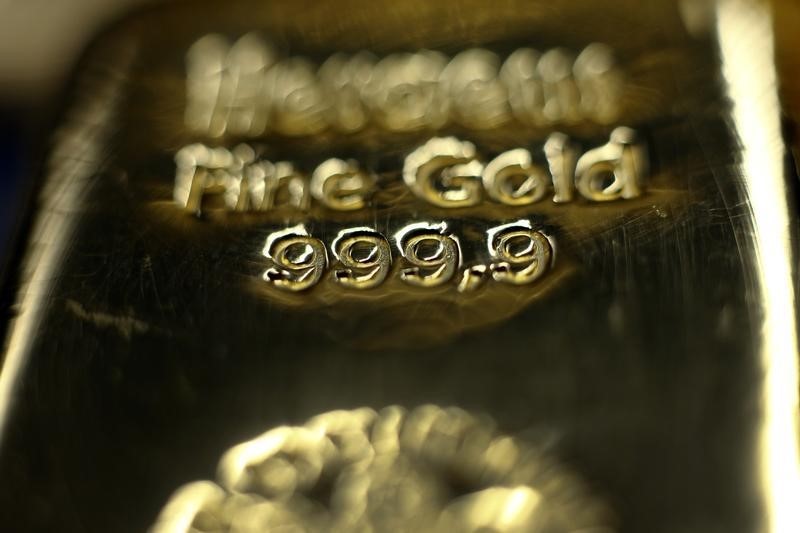
Gold prices dip in Asia after early bargain hunting, Fed views eyed - Sean Seshadri

Gold eased on Tuesday in Asia after an early round of bargain hunting as investors look beyond the widely expected Fed rate hike this month for any new language on the pace of increases going forward.
On the Comex division of the New York Mercantile Exchange gold fell 0.07% to $1,175.65 a troy ounce. Elsewhere in metals trading, silver for March delivery on the Comex rose 0.08% to $16.913 a troy ounce, while copper for March delivery fell 0.45% to $2.682 a pound.
Overnight, gold prices fell more than 1% on Monday as strength in equity markets hit safe haven demand for the precious metal and as expectations for a U.S. rate hike this month continued to weigh.
Gold initially gained after Italian voters rejected a referendum on constitutional changes backed by the government, prompting Prime Minister Matteo Renzi to step down and sending the euro to 20-month lows.
© Reuters.  Gold dips in Asia
But European stock markets and the single currency rebounded as the referendum outcome had been largely priced in by markets.
Investors were also reassured after the European Central Bank said last week that it was prepared to temporarily step up purchases of Italian government bonds should the referendum results drive up borrowing costs.
Stronger risk appetite curbs the appeal of traditional safe-haven assets, such as gold.
A report from the Institute of Supply Management on Monday showed that gauge of non-manufacturing activity hit a one-year high in November, adding to optimism over the economic outlook.
The precious metal fell almost 8% in November on the back of expectations that increased U.S. fiscal spending under a Trump administration will spur economic growth and inflation, which would ultimately lead to an era of higher interest rates.
Expectations of tighter monetary policy tend to weigh on gold, which struggles to compete with yield-bearing assets when borrowing costs rise. Overnight, New York Fed President William Dudley said on Monday it was too soon for the Fed to judge whether its plan for gradual interest rate hikes needed adjusting under a Trump administration.

Sunday, 4 December 2016

Oil prices fall as production creeps up ahead of announced 2017 output cut - Sean Seshadri

Oil prices fell by one percent on Monday as a higher U.S. rig count unsettled markets amid nagging concern that output cuts, planned as part of concerted action between producer club OPEC and Russia, might not be as big as initially anticipated.
Brent crude futures were trading at $53.89 per barrel at 0132 GMT, down 57 cents, or over 1 percent, from their last close.
West Texas Intermediate (WTI) crude futures were at $51.49 a barrel, down 52 cents, or 1 percent.
Traders said price falls were triggered by rising production just after last week's accord between the Organization of the Petroleum Exporting Countries (OPEC) and non-OPEC member Russia to cut output in 2017. The cuts aim to rein in a supply glut that has weighed on markets for over two years.
© Reuters. Rigging equipment is pictured in a field outside of Sweetwater Texas
(For graphic on OPEC's market share struggle, click http://tmsnrt.rs/2cWq5NN)
Meanwhile U.S. energy firms extended drilling for new oil production into a seventh month last week, data from energy services firm Baker Hughes showed on Friday. .
"The U.S. oil rig count continued its rally this week, up by 3 rigs...Since its trough on May 27, 2016, producers have added 161 oil rigs (+51 percent) in the U.S.," Goldman Sachs (NYSE:GS) said.
Overall - accounting for the recent rise in oil drilling, but also for cutbacks earlier this year on low prices - Goldman said "year-on-year production will decline by 620,000 barrels per day (bpd) in 2016 and increase by 55,000 bpd in 2017".
With U.S. production set to edge up, there are also gnawing concerns that the cuts announced last week by OPEC and Russia might not be as deep as initially anticipated. The planned reductions brought the sharpest weekly crude price rises in years.
Russia on Friday reported average daily oil production of 11.21 million bpd for November - its highest in almost 30 years.
And while Moscow has agreed to cut its output by 300,000 bpd in early 2017, it said it would do so against November levels. That means that even after a reduction, its output would remain higher than it was at the peak of the oil glut in the first half of 2016.
Jeffrey Halley of brokerage OANDA in Singapore said oil traders were "nervous (as) Russia's output has hit record levels, meaning their part of the production cut takes them back to what they were producing only quite recently".
In the Middle East, where the deepest OPEC production cuts are expected, there are also signs that production will rise before it gets cut.
Saudi Arabia and Kuwait are expected to agree this month to resume oil production, with a potential of 300,000 barrels in daily output, from jointly operated oilfields which were shut down between 2014 and 2015 for environmental and technical difficulties.

Thursday, 1 December 2016

Gold prices down in Asia as U.S. jobs data awaited - Sean Seshadri

Gold prices fell in Asia on Friday ahead of U.S. jobs data that is seen as icing on the cake for a Fed rate hike this month.
Nonfarm payrolls are seen up by 175,000 in November, deemed enough by most analysts to assure the Fed that the labor market continues to tighten, adding pressure on wages.
Gold futures for February on the Comex division of the New York Mercantile Exchange rose 0.57% to $1,176.05 a troy ounce. Silver futures on the Comex gained 0.80% to $16.638 a troy ounce, while copper futures dropped 0.72% to $2.616 a pound.
© Reuters.  Gold down in Asia
Overnight, gold price fell after the release of upbeat U.S. manufacturing activity data offset more disappointing U.S. jobless claims report.
The Institute for Supply Management said its manufacturing activity index rose to 53.2 last month from October’s reading of 51.9. Analysts had forecast a smaller increase to 52.2.
The report came after the U.S. Department of Labor said that initial jobless claims in the week ending November 26 increased by 17,000 to 268,000 from the previous week’s total of 251,000. Analysts had expected jobless claims to rise by just 2,000 to 253,000 last week.
The data made the case that the Federal Reserve will take a more aggressive approach on monetary policy this month. The Fed has been loathe to raise interest rates, during the Obama administration, because of tepid economic performance during the "recovery" from the Great Recession of 2007. U.S.
Market anticipation of so-called "tighter" monetary policy weighs heavily on gold, which competes with yield-bearing bonds and other instruments whenever borrowing costs rise.

Wednesday, 30 November 2016

Oil prices surge, smash trading volume records as OPEC and Russia agree output cut - Sean Seshadri

Oil prices shot up 13 percent, smashing trading volume records, after OPEC and Russia cut a deal to reduce output to drain a global supply glut, but analysts warned they could remain modest by historical comparison as other producers fill the gap.
The Organization of the Petroleum Exporting Countries (OPEC)agreed on Wednesday its first oil output reduction since 2008 after de-facto leader Saudi Arabia accepted "a big hit" and dropped a demand that arch-rival Iran also slash output. The deal also included the group's first coordinated action with non-OPEC member Russia in 15 years.
"OPEC has agreed to an historic production cut," analysts at AB Bernstein said. "The cut of 1.2 million barrels per day (bpd) was at the upper end of expectations (0.7-1.2 million bpd). An additional cut of 0.6 million bpd from non-OPEC countries could significantly add to what has been announced by OPEC."
Following the announcements, the price for Brent crude futures (LCOc1), the international benchmark for oil prices, jumped 13 percent from below $50 on Wednesday to $52.54 per barrel at 0600 GMT.
© Reuters. A gas pump is seen hanging from the ceiling at a petrol station in Seoul
U.S. West Texas Intermediate (WTI) crude futures also rose back above $50, trading at $50.11 a barrel at 0600 GMT.
"OPEC has delivered an agreement," said Jason Gammel of U.S. investment bank Jefferies. "Bulls got as much as could be hoped for...For the time being, oil prices have received a huge support."
The development also triggered frenzied trading, with Brent futures trading volumes for February and March, when the supply cut will start to be visible in the market, hitting record volumes.
The second front-month Brent crude futures contract, currently February 2017, traded a record 783,000 lots of 1,000 barrels each on Wednesday, worth around $39 billion and easily beating a previous record of just over 600,000 reached in September. That's more than eight times actual daily global crude oil consumption.
March Brent traded 288,64000 lots of 1,000 barrels each, compared with a previous record of 228,7000 lots done in July 2014.
The records also meant that Brent volumes far exceeded trades in U.S. West Texas Intermediate (WTI) crude futures, which tend to be higher than those for Brent, but which registered only 368,000 and 214,800 lots for February and March, respectively.
DOUBTS REMAIN
Despite the agreed deal, some doubts over the cut remained. "This is an agreement to cap production levels, not export levels," British bank Barclays (LON:BARC) said. "The outcome is consistent with... what OPEC production levels were expected to be in 2017 irrespective of the deal reached."
Meanwhile U.S. bank Morgan Stanley (NYSE:MS) said that "skepticism remains on individual countries' follow-through (on the cut), which is keeping prices below year-to-date highs (of $53.73 per barrel in October) for now."
Despite the jump in prices, they are still only at September-October levels - when plans for a cut were first announced - and prices are at less than half their mid-2014 levels, when the global glut started.
Goldman Sachs (NYSE:GS) said in a note following the agreement that it expected oil prices to average just $55 per barrel in the first half of next year.
OPEC produces a third of global oil, or around 33.6 million bpd, and the deal aims to reduce output by 1.2 million bpd from January 2017, similar to January 2016 levels, when prices fell to over 10-year lows amid ballooning oversupply.
Analysts said that the cuts would leave the field open for other producers, especially U.S. shale drillers.
"We do not believe that oil prices can sustainably remain above $55 per barrel, with global production responding first and foremost in the U.S.," Goldman Sachs said.
U.S. crude production has risen by over 3 percent this year to 8.7 million bpd, as its drillers have aggressively slashed costs.

Tuesday, 29 November 2016

Oil prices rise in nervous trading ahead of OPEC meeting - Sean Seshadi

Oil markets edged up in nervous trading on Wednesday ahead of an OPEC meeting later in the day, with members of the producer cartel trying to thrash out an output cut to curb oversupply that has seen prices more than halve since 2014.
International Brent crude (LCOc1) was trading at $46.85 per barrel at 0603 GMT, up 47 cents, or 1 percent, from its last close.
U.S. West Texas Intermediate (WTI) crude was up 29 cents, or 0.6 percent, at $45.52 a barrel.
Traders said markets were jittery, and that prices could sharply swing either way depending on developments at the Organization of the Petroleum Exporting Countries (OPEC) meeting in Vienna.
Oil dropped nearly 4 percent the previous session over disputes between Saudi Arabia, Iran and Iraq regarding details of the planned cut.
Despite the disagreements, most analysts still expect some form of deal.
"We expect OPEC will reach an agreement ... We believe OPEC's resolve in reaching an agreement remains strong," ANZ bank said.
Analysts at Goldman Sachs (NYSE:GS), Barclays (LON:BARC), and ANZ agree that oil prices would quickly rise above $50 per barrel should OPEC come to an agreement. Without a deal, the consensus is for a fall to the low $40s.
Iran and Iraq are resisting pressure from Saudi Arabia to curtail production, making it hard for the group to reach a deal.
Iranian Oil Minister Bijan Zanganeh told reporters upon arrival at OPEC's headquarters in Vienna that his country was not prepared to reduce output: "We will leave the level of production (where) we decided in Algeria."
OPEC, which accounts for a third of global oil production, made a preliminary agreement in Algiers in September to cap output around 32.5-33 million bpd versus the current 33.64 million bpd to prop up prices.
OPEC said it would exempt Iran, Libya and Nigeria from cuts as their output had been crimped by unrest and sanctions.
One of the biggest OPEC concerns is that by cutting output it would simply hand over market share to non-OPEC competition.
There are strong indicators that such concerns are warranted: U.S. shale drillers have radically slashed production costs in the last few years, to now between $35 and $40 per barrel.
A potential compromise would be for OPEC to return to some form of production quota, instead of ordering outright cuts.
Although that would do nothing to end a glut in which more crude is produced than consumed, it would potentially help balance the market in the long-term as rising demand would gradually bring consumption to output levels.

Monday, 28 November 2016

Oil prices dip on scepticism ahead of OPEC meeting - Sean Seshadri

Oil prices dipped on Tuesday on doubts that producer cartel OPEC will be able to hammer out a meaningful output cut during a meeting on Wednesday aimed at reining in a global supply overhang and propping up prices.
International Brent crude oil futures (LCOc1) were trading at $47.99 per barrel at 0305 GMT, down 25 cents, or 0.5 percent, from their last close.
U.S. West Texas Intermediate crude futures (CLc1) were down 23 cents, or 0.5 percent, at $46.85 a barrel.
The Organization of the Petroleum Exporting Countries (OPEC) is meeting officially in Vienna on Wednesday to discuss a planned production cut in an effort to curb overproduction that has dogged markets and more than halved prices since 2014.
With a high degree of uncertainty going into the last 24 hours before the meeting, oil price volatility is expected to be high.
© Reuters. A pump jack used to help lift crude oil from a well in South Texas’ Eagle Ford Shale formation stands idle in Dewitt County Texas
"I still think they need to do a deal even though my confidence has dropped back to coin toss levels," said Greg McKenna, chief market strategist at Australian brokerage AxiTrader.
Jeffrey Halley, senior market analyst at OANDA brokerage in Singapore said he expected "intra-day volatility to ratchet higher again into tomorrow, with price action being entirely headline driven."
There remains disagreement among OPEC-members over which producers should cut by how much, and a plan for non-OPEC oil giant Russia to participate has so far also failed.
Beyond OPEC's production policy, oil demand remains firm.
South Korea's crude imports rose 3.9 percent in the third quarter of 2016 from a year earlier, as oil consumption climbed thanks to low oil prices.
The world's fifth-largest crude importer shipped in 270.4 million barrels of crude oil in the July-September period, or 2.94 million barrels per day (bpd), compared with 260.3 million barrels in the same period in 2015, its energy ministry said on Tuesday in a statement.