Tuesday, 11 April 2017

Oil struggles to continue rally ahead of inventories - Sean Seshadri

Oil prices underwent choppy trade on Tuesday as black gold struggled to maintain a nearly week-long rally that have pushed prices up around 5% as markets looked ahead to data on U.S. crude stockpiles.
The U.S. West Texas Intermediate crude May contract was last at $53.09 by 9:22AM ET (13:22GMT), up 0.02%, or $0.01, after rising to $53.23 earlier in the session. The NYMEX barrel has pocketed gains of 5.4% since its last down day on April 3 when it closed at $50.24.
Elsewhere, Brent oil for June delivery on the ICE Futures Exchange in London slipped on 5 cents to $55.93 a barrel after hitting an intraday high at $56.16. The global benchmark has risen nearly 6% so far in April.
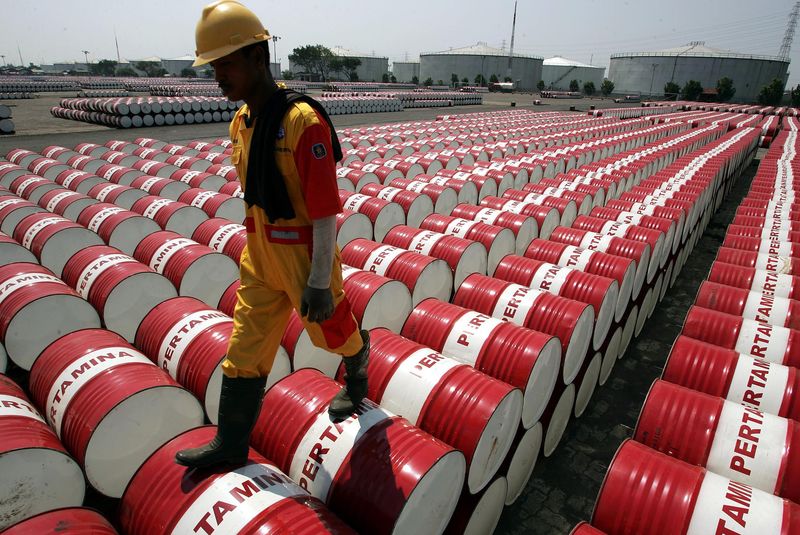
© Reuters.  Oil undergoes choppy trade amid production news, weekly crude stockpiles on tap
Bullish investors have been betting that the production cuts that major oil producers have already agreed to are not only effective, but could be extended beyond the current June cutoff.
Russia oil minister Alexander Novak said that his country’s oil output would be cut by 250,000 barrels-per-day (bpd) by mid-April and that Moscow will begin talking to Russian oil producers about the possibility of extending the production cut in agreement with OPEC, according to the TASS news agency.
Saudi Arabia also decreased production to 9.9 million bdp in March from the 10 million reported the prior month, according to Bloomberg, adding that the direct reporting numbers also revealed that Nigeria had reduced production to 1.27 million bpd from 1.43 million and Venezuela had cut to 2.235 million from 2.248 million. However, Qatar had increased production to 621,000 bpd in March from the prior 545,000, according to the news agency.
Meanwhile, Libya’s output was reported to drop to 490,000 bpd as production at its biggest oil field was halted.
OPEC agreed in November last year to curb its output by about 1.2 million barrels per day between January and June. Russia and 10 other non-OPEC producers have agreed to jointly cut by an additional 600,000 barrels per day.
In total, they agreed to reduce output by 1.8 million barrels per day to 32.5 million for the first six months of the year.
A joint committee of ministers from OPEC and non-OPEC oil producers will meet in late April to present its recommendation on the fate of the pact. A final decision on whether or not to extend the deal beyond June will be taken by the oil cartel on May 25.
In the meantime, investors were keeping an eye on U.S. drilling activity that has been steadily increasing even as other major oil producers reduce production in an attempt to reduce the global supply glut and push prices higher.
Late Friday, data from oil services provider Baker Hughes showed that the number of active rigs drilling for oil in the U.S. rose by 10 to 672. That was the 12th straight weekly increase to the highest number since August 2015.
Meanwhile, market players looked ahead to the American Petroleum Institute’s weekly report on crude inventories at 4:30PM ET (20:30GMT) Tuesday.
Official government figures will be released on Wednesday amid expectations for a build of 0.316 million barrels.

Monday, 10 April 2017

Oil prices rise but increasing U.S. output tempers gains - Sean Seshadri

Oil prices rose on Monday, approaching the prior sessions’ one-month highs amid concerns over mounting geopolitical risk, but industry data pointing to another increase in U.S. output capped gains.
Global benchmark Brent futures rose 39 cents or 0.69% to $55.61 a barrel on the ICE Futures Exchange in London.
U.S. crude oil was trading at $52.55 a barrel at 07.53 GMT, up 32 cents or 0.63% from its last close.
Oil prices hit one-month highs Friday as U.S. cruise missile strikes on a Syrian air base raised concerns that conflict in the oil-producing region could spread.
© Reuters.  Oil prices rise but increasing U.S. output tempers gains
Both U.S. crude and Brent rose more than 3% last week, notching up a second straight weekly increase.
But gains were held in check as oil traders continued to focus on the ongoing rebound in U.S. shale production, which could derail efforts by other major producers to reduce a global supply glut.
Oilfield services provider Baker Hughes said late Friday that the number of active U.S. rigs drilling for oil rose again last week to the highest since September 2015.
Market participants, however, remained optimistic that the Organization of the Petroleum Exporting Countries would extend its current deal with non-OPEC producers to cut output beyond June in an effort to rebalance the market.
A joint committee of ministers from OPEC and non-OPEC producers will meet in late April to present its recommendation on the fate of the pact. A final decision on whether or not to extend the deal beyond June will be taken by the oil cartel on May 25.

Wednesday, 5 April 2017

Oil prices fall on bloated U.S. market, but other regions tighten - Sean Seshadri

Oil prices fell on Thursday as record U.S. crude inventories underscored that markets remain bloated, although traders said there were signs that other regions were gradually tightening.
Brent crude futures were at $54.09 per barrel at 0530 GMT, down 27 cents, or 0.5 percent, from their last close.
U.S. West Texas Intermediate (WTI) crude futures were down 26 cents, or 0.5 percent, at $50.89 a barrel.
Traders said the declines were due to rising U.S. crude production that bolstered inventories to record levels.
© Reuters. FILE PHOTO: A man pumps petrol for his car at a petrol station in Hanoi
U.S. fuel inventories and oil production levels are key to whether the United States remains the world's biggest oil importer, helping to support prices, or if soaring output and large stocks cut imports, which would weigh on oil markets.
The U.S. Energy Information Administration (EIA) reported an increase of 1.57 million barrels in crude inventories late on Wednesday, bringing total U.S. stocks to a record of 535.5 million barrels.
"Overnight crude inventory numbers pulled the rug out from under the feet of the oil rally," said Jeffrey Halley, senior analyst at futures brokerage OANDA.
The record crude inventories came as U.S. oil production rose 52,000 barrels per day (bpd) to 9.2 million bpd, a more than 9 percent increase since mid-2016 to levels last seen at the start of the market slump in late 2014 and early 2015.
Within the U.S. crude inventories, stocks at Cushing, the delivery hub for WTI, rose 1.4 million barrels to a record 69.1 million barrels. Rising stocks at Cushing, in Oklahoma, typically tend to depress the price of the U.S. benchmark.
Cushing crude tank farms have a total storage capacity of 77 million barrels, said Ole Hansen, head of commodity strategy at Saxo Bank.
Because of the glut, U.S. crude exports have soared to a record 1.1 million bpd, with most cargoes going to Asia, where traders say there are early signs of a tightening market due to efforts led by the Organization of the Petroleum Exporting Countries (OPEC) to cut output in an effort to prop up prices.
"The global picture is more important (than just the U.S.) and stocks are being drawn," said Oystein Berentsen, managing director at oil trading company Strong Petroleum in Singapore.
In the short-term, he said, a lot of oil was being sold out of storage around the world, adding to the imminent glut.
But Berentsen warned that once a significant amount of crude had been sold out of inventories, "then you get the full effect (of tighter supplies)."

Thursday, 30 March 2017

Gold prices fall in Asia on strong dollar, political risks eyed - Sean Seshadri

Gold prices dipped in Asia on Friday with a stronger dollar weighing on demand, but support coming on political risks, including a meeting next week in Florida between President Donald Trump and China's President Xi Jinping as well as elections in France and chances of a far-right government.
Gold for April delivery on the Comex division of the New York Mercantile Exchange fell 0.40% to 1,240.00 a troy ounce. Copper futures fell 0.30% to $2.668 a pound.
China's semi-official manufacturing PMI rose to 51.8, the China Federation of Logistics & Purchasing (CFLP) said Friday, beating the expected 51.6 level and releasing the figures one day ahead of the normal first of the month release and ahead of the Caixin PMI figures.
© Reuters.  Gold down in Asia
Earlier in Japan, household spending for February slumped 3.8% year-on-year, compared to a 1.7% decline seen. On a monthly basis however it rose 2.5%, beating the expected 0.4% rise.
Separately, national core CPI fell 0.2% for February year-on-year as expected, while unemployment dipped to 2.8% from 3.0%. Provisional industrial production for February rose 2.0% month-on-month, beating the expected 1.2% increase.
The dollar rose to a nine-day high against a basket of currencies on Thursday, easing slightly to around 100.40 on Friday in Asia. Gold is priced in greenbacks, making it potentially more expensive for holders of other currencies.
Overnight, gold prices traded lower on Thursday, as a push in the dollar weighed on the yellow metal, after the release of upbeat economic data and continued rate hike chatter from several Fed officials.
Gold prices fell to session lows, and on track to end the week in negative, after the dollar swooped to a nine-day high, buoyed by an upward revision in GDP data and hawkish comments from several Fed officials.
The Commerce Department earlier reported that U.S. gross domestic product grew faster than previously reported in the fourth quarter.
Cleveland Federal Reserve reiterated her hawkish view concerning interest rate hikes Thursday, as she said that “further removal of accommodation via increases in the fed funds rate will be needed” should economic conditions “evolve as anticipated”.
Fed President John Williams, tapered some of his bullish rhetoric on the U.S. economy, after he said even though the economy shows “consistent” and “encouraging” signs, “housing still isn’t quite back”.
Economic uncertainty in Europe, as the date of the French presidential election draws closer and the start of Britain’s departure from the European Union, have largely offset the negative impact a stronger greenback has on dollar denominated assets such as gold.
Meanwhile, cash crunches in India due to the government’s recent demonetization will likely act as a temporary headwind for gold prices in the coming months, according to a report from FocusEconomics Consensus Forecast – Commodities.

Sunday, 26 March 2017

Oil falls on rising U.S. drilling, uncertainty of OPEC-led cut extension - Sean Seshadri

Oil prices fell on Monday, pulled down by rising U.S. drilling activity and by doubts whether an OPEC-led production cut initially due to end in mid-2017 would be extended.
Benchmark Brent crude futures (LCOc1) fell by 37 cents, or 0.73 percent, from their last close to $50.43 per barrel by 0626 GMT.
In the United States, West Texas Intermediate (WTI) crude futures (CLc1) were down 45 cents, or 0.94 percent, at $47.52 a barrel.
Traders said that prices were pulled down by rising U.S. drilling and production as well as over uncertainty whether the Organization of the Petroleum Exporting Countries (OPEC) and other producers, who met in Kuwait over the weekend, would extend output cuts beyond the middle of the year.
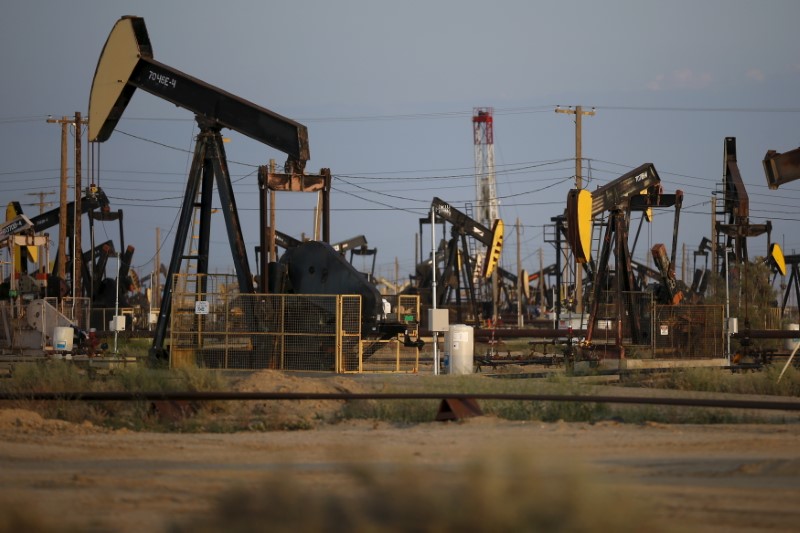
© Reuters. Pump jacks are seen in the Lost Hills Oil Field, California
"There is currently no shortage of crude oil...the fact that shale oil is going to burgeon is also painfully evident," said Sukrit Vijayakar, director of energy consultancy Trifecta. Vijayakar said there also "seems to be a difficulty in reaching consensus on extending the production cuts".
Traders said that rising U.S. drilling activity and oil production were contributing to financial traders reducing their long positions in crude futures to the lowest level since early December.
Since mid-2016, U.S. oil production has risen by 700,000 barrels per day (bpd), or 8.3 percent, to 9.13 million bpd, government data shows .
U.S. bank Goldman Sachs (NYSE:GS) said that should the rig count stay at current levels and the impact of previously closed rigs returning to production was considered, then U.S. oil production would rise by 235,000 bpd between the fourth quarter of 2016 and the first half of 2017.
Because of soaring U.S. output and the cuts by OPEC, the discount of U.S. WTI crude prices to international Brent crude has grown to around $2.90 per barrel, heading for its widest close since late 2015, encouraging more sales of U.S. oil to Asia to replace cuts in Middle East production.
Despite the ongoing fuel supply overhang and rising U.S. shale output, Goldman Sachs said that global oil markets were slowly rebalancing, largely due to strong demand growth.
"While the shale production rebound has surprised to the upside, it will be offset in our view by the high compliance to the production cuts through 1H17 and most importantly, strong demand levels," the bank said.
"We believe that the rebalancing of the oil market is in fact making progress," it said, adding that an OPEC-led extension of the production cut was therefore not needed.

Thursday, 23 March 2017

Oil bounces off November lows, but bloated US stockpiles pressure market - Sean Seshadri

Oil prices recovered on Thursday from losses chalked up the session before, but the market remained under pressure as bloated U.S. crude inventories and rising output dampen OPEC-led efforts to curb global production.
Brent crude futures, the international benchmark for oil, were at $50.99 per barrel at 0621 GMT, up 35 cents, or 0.7 percent, from their last close. That came after Brent briefly dipped below $50 a barrel on Wednesday for the first time since November.
U.S. West Texas Intermediate (WTI) crude futures were up 37 cents, or 0.8 percent, at $48.41 a barrel, after testing support at $47 overnight.
© Reuters. FILE PHOTO - An oil pump jack pumps oil in a field near Calgary
Analysts said Brent had found technical support around $50 a barrel and was being pushed up as traders took new long positions after crude hit multi-month lows overnight.
Despite the bounce, traders said the market remained under pressure, largely due to a big U.S. inventory and doubts that an effort led by the Organization of the Petroleum Exporting Countries (OPEC) to cut output was reining in a global fuel supply overhang.
Greg McKenna, chief market strategist at futures brokerage AxiTrader, said OPEC was "underwriting the investment plans and returns of their competition in U.S. shale oil."
McKenna said there was a risk of oil prices dropping further due to U.S. output and a lack of compliance by some producers who said they would cut production.
Oil prices could rise to $60 per barrel in the second quarter, assuming inventory draws and oil producer output cuts remain in place, Barclays (LON:BARC) said in a report on Thursday.
"However, this would likely be temporary, and we forecast prices in the mid-$50s per barrel in the second half 2017," the bank said.
The Energy Information Administration (EIA) said U.S. inventories climbed almost 5 million barrels to a record 533.1 million last week, far outpacing forecasts of a 2.8 million-barrel build.
The high inventories come as U.S. oil production has risen over 8 percent since mid-2016 to more than 9.13 million barrels per day (bpd) to levels comparable in late 2014, when the oil market slump started.
There were also signs of a bloated market in Asia, where China's gasoline imports slumped while its refiners sent huge volumes overseas as they refine more fuel than the domestic market can absorb.
China's gasoline exports in February hit the second highest on record, up 76.6 percent over a year earlier at 1.06 million tonnes, data from the Chinese customs showed on Thursday. Diesel exports last month surged 66.7 percent on year at 1.32 million tonnes.
China imported just 7,245 tonnes of gasoline in February, tumbling 94 percent from the same period last year. Diesel imports dropped 52 percent from a year ago to 50,000 tonnes.

Tuesday, 21 March 2017

Gold climbs to more than 2-week high as dollar sinks - Sean Seshadri

Gold prices rose to a more than two-week high during North American hours on Tuesday, as the U.S. dollar continued to head south in wake of the Federal Reserve's dovish guidance on the future pace of rate hikes.
Comex gold futures jumped to a session peak of $1,237.95 a troy ounce, the highest since March 2. It was last at $1,237.15 by 9:40AM ET (13:40GMT), up $3.50, or around 0.3%. It settled higher for the third session in a row on Monday.
Meanwhile, spot gold was up $3.40 at $1,237.70 per ounce.
The U.S. dollar index, which measures the greenback’s strength against a trade-weighted basket of six major currencies, was down around 0.6% at 99.59 in New York morning trade, the weakest level since February 3.
The greenback has been on the retreat since the Fed raised interest rates on Wednesday last week, but stuck to its outlook for two more hikes this year, instead of three expected by the market.
Market players awaited comments from a number of Fed policymakers for more clues on the timing of the next U.S. rate hike.
Tuesday sees New York Fed President William Dudley, Kansas City Fed President Esther George and Cleveland Fed President Loretta Mester make public appearances. Fed Chair Janet Yellen speaks on Thursday.
The precious metal is sensitive to moves in U.S. rates, which lift the opportunity cost of holding non-yielding assets such as bullion.
A gradual path to higher rates is seen as less of a threat to gold prices than a swift series of increases.
© Reuters.  Gold climbs to more than 2-week high
Headlines from Washington will also be in focus, as traders await further details on President Donald Trump's promises of tax reform and infrastructure spending.
The House is expected to vote on a heath care bill Thursday, and if it passes that would be seen as a small step moving Congress closer to considering tax reform, though any legislation must also battle its way through the Senate.
Also on the Comex, silver futures for May delivery tacked on 15.2 cents, or about 0.9%, to $17.58 a troy ounce, the most since March 7.
Meanwhile, platinum added around 0.3% to $975.15, while palladium rose 0.9% to $788.85 an ounce.
Elsewhere in metals trading, copper futures dropped 2.9 cents, or 1.1%, to $2.638 a pound, following reports that a strike at a key Indonesian mine has ended, easing concern over a disruption to supply.