Thursday, 22 June 2017

Turkish exports to Qatar triple during Gulf crisis: trade minister - Sean Seshadri

Turkish exports to Qatar have tripled from their normal levels to $32.5 million since four Arab countries began boycotting the Gulf state on June 5, Turkey's Customs and Trade Minister Bulent Tufenkci said late on Thursday.
Saudi Arabia, the United Arab Emirates (UAE), Egypt and Bahrain accuse Qatar of funding terrorism, fomenting regional instability and cosying up to revolutionary theocracy Iran. Qatar has denied the accusations.
They have sent Doha a list of 13 demands including closing Al Jazeera television, reducing ties to their regional adversary Iran and closing a Turkish military base in Qatar, an official of one of the four countries told Reuters.

© Reuters. Buildings are seen on a coast line in Doha
Turkey, which has long tried to play the role of regional mediator, has backed Qatar in the dispute but is also wary of upsetting its other allies, including Saudi Arabia.
"Since June 5 exports to Qatar have amounted to $32.5 million. Of this $12.5 million is food. This figure is three times the normal level," Tufenkci told reporters at a Ramadan fast-breaking dinner on Thursday evening.
Turkey has sent more than 100 cargo planes of supplies to Qatar but Economy Minister Nihat Zeybekci has said it was not sustainable to maintain supplies through an air lift.
On Thursday, Turkey sent its first ship carrying food to Qatar and dispatched a small contingent of soldiers and armored vehicles there, while President Tayyip Erdogan spoke with Saudi Arabia's leaders on calming tension in the region.
Turkey fast-tracked legislation on June 7 to allow more troops to be deployed to a military base in Qatar that houses Turkish soldiers under an agreement signed in 2014.

Wednesday, 21 June 2017

Gold tick higher but holds near 5-week lows on Fed rate hike views - Sean Seshadri

Gold prices edge higher in European morning trade on Wednesday, but stayed near the lowest level in around five weeks as investors worried about future Federal Reserve rate hikes.
The precious metal is sensitive to moves in U.S. rates, which lift the opportunity cost of holding non-yielding assets such as bullion.
Comex gold futures were at $1,247.85 a troy ounce by 3:35AM ET (0735GMT), up $4.25, or around 0.3%. Gold prices notched a second-straight decline on Tuesday after falling to its lowest since May 17 at $1,242.40.
Also on the Comex, silver futures were up 2.2 cents, or roughly 0.1%, to $16.43 a troy ounce, after hitting its lowest since May 12 at $16.36 a day earlier.
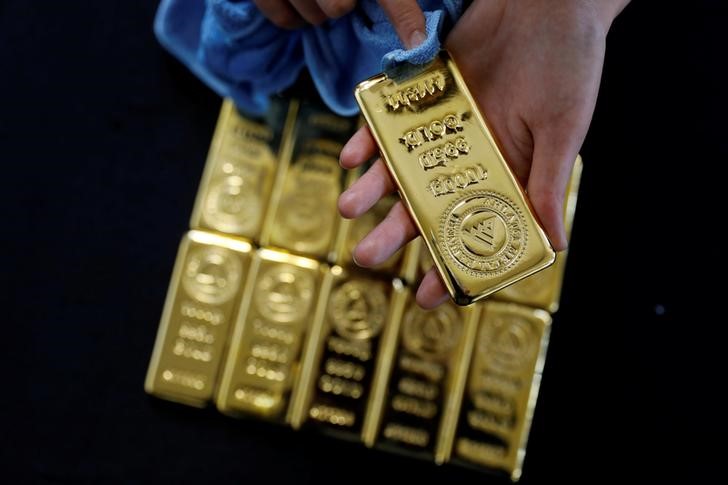
© Reuters.  Gold tick higher but holds near 5-week lows
Market expectations for another Fed rate hike later this year have improved in wake of hawkish comments made by influential New York Fed Chief William Dudley earlier this week.
Dudley gave an upbeat assessment of the economy on Monday and warned against the central bank taking a pause in the tightening cycle. He added that U.S. inflation is a bit low but should rise alongside wages as the labor market continues to improve, allowing the Fed to continue gradually tightening U.S. monetary policy.
The remarks echoed similar comments made by Fed Chair Janet Yellen in last week’s press conference after the central bank hiked rates for the second time this year and maintained plans to go ahead with another rate hike by year-end.
The Fed also provided greater detail about how it plans to reduce its massive $4.5 trillion balance sheet.
Futures traders are pricing in around a 20% chance of a hike at the Fed's September meeting, according to Investing.com’s Fed Rate Monitor Tool. Odds of a December increase was seen at about 40%.
Market players will focus on U.S. housing data due later in the global day to gauge if a recent downtick in consumer spending and inflation is translating into lower home prices and slack in sales.
The National Association of Realtors is to release data on existing home sales for May at 10:00AM ET (1400GMT) amid forecasts for a decline of 0.7% to 5.55 million.
Among other precious metals, platinum was down 0.3% at $918.80, while palladium dipped 0.5% to $863.15 an ounce.

Monday, 19 June 2017

Oil prices slip as U.S. rigs rise, demand growth falters - Sean Seshadri

Oil prices edged lower on Monday, weighed down by an expansion in U.S. drilling that has helped to maintain high global supplies despite an OPEC-led initiative to tighten the market by cutting production.
Signs of faltering demand have also prompted weakening sentiment, dropping prices to levels comparable to when the output cuts were first announced late last year.
Brent crude futures (LCOc1) were down 16 cents at $47.21 per barrel at 0841 GMT.
U.S. West Texas Intermediate (WTI) crude futures (CLc1) were down 19 cents at $44.55 per barrel.
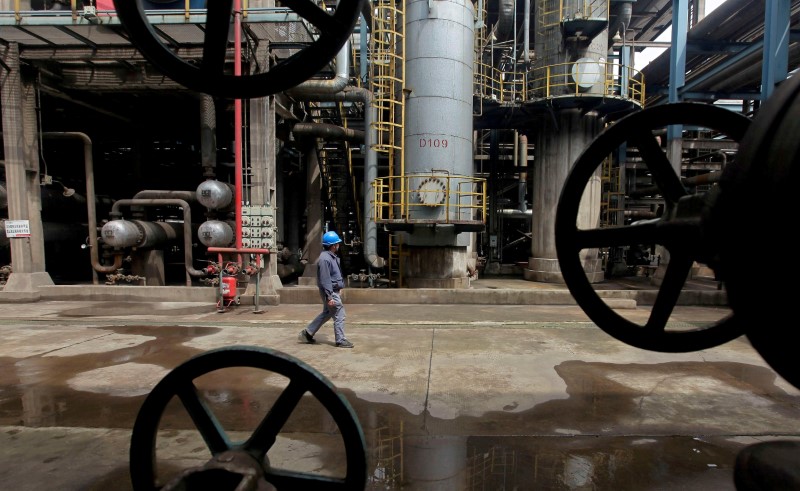
© Reuters. FILE PHOTO: A worker walks past oil pipes at a refinery in Wuhan
Prices for both benchmarks are down around 14 percent since late May, when producers led by the Organization of the Petroleum Exporting Countries extended a pledge to cut output by 1.8 million barrels per day (bpd) for an extra nine months.
Analysts said a steady rise in U.S. production, along with output increases in cut-exempt Libya and Nigeria, were undermining the OPEC-led effort.
"Anyone who is looking for the bottom of the current price fall must keep his or her eyes on the supply-side equation and only get optimistic if the factors that have been driving oil prices lower since the end of May change," PVM analyst Tamas Varga said.
Data on Friday showed a record 22nd consecutive week of increases in the number of U.S. oil rigs, bringing the count to 747, the most since April 2015.
Investment bank Goldman Sachs (NYSE:GS) said if the rig count holds, U.S. oil production would increase by 770,000 bpd between the fourth quarter of last year and the same quarter this year in the Permian, Eagle Ford, Bakken and Niobrara shale oilfields.
Supplies from OPEC also jumped in May, driven by recovering output from Libya and Nigeria, which were exempt from cuts due to unrest that had hindered their output.
There are also indicators that demand growth in Asia, the world's biggest oil-consuming region, is stalling.
Japan's customs-cleared crude imports fell 13.5 percent in May from a year earlier, the Finance Ministry said.
India took in 4.2 percent less crude in May than it did a year before.
In China, oil demand growth has been slowing for some time, albeit from record levels.
Saudi Energy Minister Khalid al-Falih said the oil market needed time to rebalance, pointing to a draw of around 50 million barrels from floating storage and a drop in industrial nations' onshore storage compared to July last year.

Friday, 16 June 2017

Oil edges up but remains near half-year lows as supply overhang weighs - Sean Seshadri

Oil prices edged up on Friday but remained near six-month lows, held down by an ongoing supply overhang that persists despite an OPEC-led effort to cut production and prop up crude markets.
Brent crude futures were at $47.12 per barrel at 0656 GMT, 20 cents, or 0.4 percent, above their last settlement.
U.S. West Texas Intermediate (WTI) crude futures were at $44.56 per barrel, up 10 cents, or 0.2 percent.
Traders said the slight increases were a result of the threat of a partial export halt in Libya.
However, prices for both benchmarks are still down by around 13 percent since late May, when producers led by the Organization of the Petroleum Exporting Countries (OPEC) extended a pledge to cut production by 1.8 million barrels per day (bpd) by an extra nine months until the end of the first quarter of 2018.
Rising U.S. oil output, particularly from shale drillers, is contributing to the ineffectiveness of the OPEC-led cuts.
"Oil is unlikely to find solace into the weekend either, with tonight's Baker Hughes Rig Count expected to deliver its now weekly increase of operational rigs," said Jeffrey Halley, senior market analyst at futures brokerage OANDA in Singapore.
U.S. investment bank Jefferies said the low prices were due to "a relentless build in the U.S. rig count, weekly builds in U.S. inventories, rising production in Nigeria and Libya, and weak compliance by key OPEC members Iraq and the UAE."
High exports and production from Russia is also contributing to the ongoing glut.
Top producer Russia, not an OPEC member but participating in the deal, is expected to export 61.2 million tonnes of oil via pipelines in the third quarter (around 5 million bpd), against 60.5 million tonnes in the second quarter, according to industry sources and Reuters calculations.
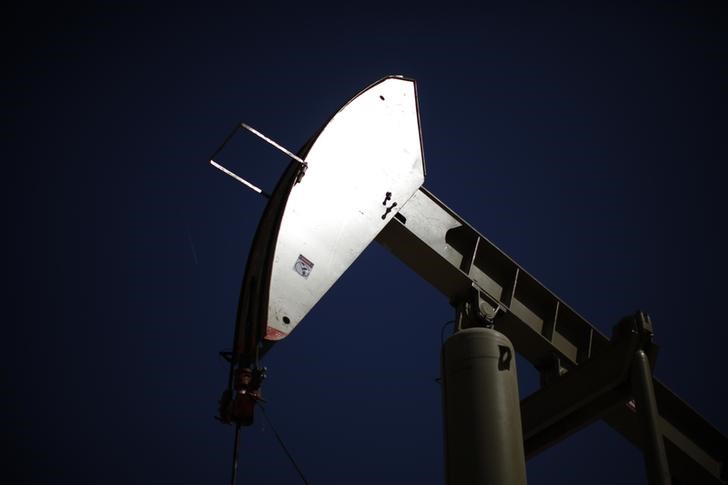
© Reuters. A pumpjack drills for oil in the Monterey Shale
Add in Russia's tanker shipments and its total exports are likely more than 9 million bpd.
In the United States, which is not participating in any deal to hold back production, oil output has risen more than 10 percent over the past year to 9.3 million bpd, and the Energy Information Administration (EIA) expects that figure to rise above 10 million bpd in 2018.
In a sign of the continuing supply overhang, traders are again hiring oil tankers to store unsold crude while they wait for higher prices.
(This story corrects paragraph 4 to show there is threat of partial Libyan export reduction, not an actual cut at this stage)

Thursday, 1 June 2017

Gold prices off 5-week highs on stronger dollar - Sean Seshadri

Gold prices pulled away from the previous session’s five-week highs on Thursday, as the dollar regained some ground ahead of a string of U.S. data due later in the day and on Friday amid mounting hopes for a June rate hike by the Federal Reserve.
On the Comex division of the New York Mercantile Exchange, gold futures for June delivery were down 0.39% at $1,267.05.
The June contract ended Wednesday’s session 0.78% lower at $1,272.00 an ounce.
Futures were likely to find support at $1,258.40, Tuesday’s low and resistance at $1,273.95, Wednesday’s high.
Gold prices slide lower as U.S. dollar rebounds
The greenback recovered from recent losses posted amid ongoing fears investigations into President Donald Trump's ties with Russia could hamper his administration's progress on promised stimulus measures.
The Trump administration is under investigation by the Federal Bureau of Investigation and several congressional panels over alleged Russian meddling in the 2016 presidential election and potential collusion with the Trump campaign.
The U.S. dollar index, which measures the greenback’s strength against a trade-weighted basket of six major currencies, was up 0.12% at 97.03, off Wednesday’s one-week low of 96.80.
A stronger U.S. dollar usually weighs on gold, as it weakens the metal's appeal as an alternative asset and makes dollar-priced commodities more expensive for holders of other currencies.
Market participants were especially eyeing Friday’s nonfarm payrolls report for further indications on the strength of the U.S. job market, which could give additional clues on whether or not the Federal Reserve will hike rates at its June policy meeting.
The precious metal is sensitive to moves in U.S. rates, which lift the opportunity cost of holding non-yielding assets such as bullion. A gradual path to higher rates is seen as less of a threat to gold prices than a swift series of increases.
Elsewhere in metals trading, silver futures for July delivery declined 0.71% to $17.283 a troy ounce, while copper futures for July delivery slid 0.27% to $2.573 a pound.

Monday, 29 May 2017

Oil struggles as markets weigh U.S. drilling, OPEC cuts - Sean Seshadri

Oil prices swung between gains and losses in European trading on Monday, as the market weighed rising U.S. drilling against efforts by major producers to cut output to reduce a global glut.
The U.S. West Texas Intermediate crude July contract shed 6 cents, or around 0.1%, to $49.74 a barrel by 3:20AM ET (07:20GMT).
Elsewhere, Brent oil for August delivery on the ICE Futures Exchange in London dipped 5 cents to $52.46 a barrel.
Trading volumes were likely to remain light with U.S. markets closed Monday for Memorial Day while the U.K. is also shuttered for a public holiday.
© Reuters.  Oil edges lower
Oil ministers from the Organization of Petroleum Exporting Countries and other major producing countries, such as Russia, agreed to extend supply cuts of 1.8 million barrels per day until the end of the first quarter of 2018.
While OPEC's move had been widely expected, some oil market investors had hoped producers would agree to longer or deeper cuts to drain a global glut of crude supplies.
So far, the production-cut agreement has had little impact on global inventory levels due to rising supply from producers not participating in the accord, such as Libya and Nigeria, and a relentless increase in U.S. shale oil output.
Data from energy services company Baker Hughes showed on Friday that U.S. drillers last week added rigs for the 19th week in a row, the longest such streak on record, implying that further gains in domestic production are ahead.
The U.S. rig count rose by 2 to 722, extending an 11-month drilling recovery to the highest level since April 2015.
Elsewhere on Nymex, gasoline futures for July inched down 0.2 cents to $1.623 a gallon, while July heating oil was little changed at $1.566 a gallon.
Natural gas futures for July delivery sank 7.8 cents to $3.232 per million British thermal units.

Friday, 19 May 2017

Crude prices gain slightly in Asia, U.S. rig count eyed - Sean Seshadri

Crude prices rose slightly in early Asia on Friday with weekly rig countfigures expected to set the near-term tone ahead of next week's meeting of OPEC and allied producers on production cuts.
On the New York Mercantile Exchange crude futures for June delivery edged up 0.04% to $49.37 a barrel, while on London's Intercontinental Exchange, Brent was last quoted at $52.49 a barrel.
In figures reported last Friday, oilfield servcies firm Baker Hughes said U.S. drillers added 9 oil rigs to take the total to 712, rigs for the 17th weekly gain in a row and extending an 11-month drilling recovery to the highest level since August 2015, implying that further gains in domestic production are ahead.
Overnight, crude futures settled higher on Thursday, as investors remained optimistic that OPEC would reach an agreement to extend the current supply-cut deal beyond June at its meeting next week.
© Reuters.  Crude up in Asia
In what was a choppy day of trade, oil futures recovered from a more than 1% slump, as investors' optimism that OPEC would seek an extension of the current deal to cut global production offset concerns over the rising level of U.S. shale production.
The Energy Information Administration said Wednesday, crude oil inventories fell by 1.75 million barrels last week, which was the sixth-straight week of declining crude stockpiles but the dip in inventories fell short of expectations of a draw of around 2.4 million barrels.
Despite the high level of compliance from OPEC members with the deal to rein in supply, global production remains above the five-year average, as non-OPEC members, who are not part of the supply-cut agreement have ramped up production.
In its monthly report last Thursday, OPEC estimated that non-OPEC production this year would grow by 950,000 barrels per day (bpd).
OPEC and other producers are set to meet on May 25 to decide whether to extend the current supply-cut deal amid growing optimism for a prolonged period of cuts.
Saudi Arabia and Russia agreed earlier this week that production cuts needed to be extended for a period of nine months until March 2018.
The International Energy Agency (IEA) on Wednesday, however, warned that OPEC’s effort to rein in the glut in supply may fail even if the oil group agrees to extend its supply-cut agreement.