Thursday, 13 July 2017

Sean Seshadri - IEA says OPEC compliance with oil cuts at lowest in six months

OPEC's compliance with production cuts fell in June to its lowest levels in six months as several members pumped much more oil than allowed by their supply deal, thus delaying market rebalancing, the International Energy Agency said on Thursday.
OPEC's compliance with cuts slumped to 78 percent last month from 95 percent in May as higher-than-allowed output from Algeria, Ecuador, Gabon, Iraq, the UAE and Venezuela offset strong compliance from Saudi Arabia, Kuwait, Qatar and Angola.
"Each month something seems to come along to raise doubts about the pace of the rebalancing process. This month, there are two hitches: a dramatic recovery in oil production from Libya and Nigeria and a lower rate of compliance by OPEC with its own output agreement," the Paris-based IEA said.
IEA says OPEC compliance with oil cuts at lowest in six months
The Organization of the Petroleum Exporting Countries and several non-OPEC producers including Russia have agreed to cut production by around 1.8 million barrels per day until March 2018 to ease a global crude glut spurred by booming U.S. output.
OPEC members Libya and Nigeria were exempted from the cuts due to years of unrest that have sapped their output. The two countries have managed to increase their combined production by more than 700,000 bpd in recent months, the IEA said.
"For fellow OPEC members, who agreed to reduce production by 1.2 million bpd, to see their cut effectively diluted by nearly two-thirds must be very frustrating, especially as their pact has, hitherto, been well observed by historical standards," the IEA said.
The cuts have stabilized oil at around $45-50 per barrel, but prices have come under renewed pressure in recent weeks due to growing U.S. output and little evidence of global stocks falling from record highs above 3 billion barrels.
The IEA, which advises industrialized nations on energy policy, said strong demand growth in the second half of 2017 and in 2018 should nevertheless speed up market rebalancing.
It said demand for OPEC's crude was forecast to rise steadily through 2017 and reach 33.6 million bpd in the fourth quarter - up 1 million bpd on OPEC's June output.
"Provided there is strong compliance with OPEC's cuts, that would imply a hefty stock draw, even if Libya and Nigeria recover further," it said.
The IEA said stocks in industrialized nations in May were 266 million barrels above the five-year average, down from 300 million barrels in April. Preliminary data shows a further moderate reduction in stocks for June.
The agency also said that while non-OPEC producers such as the United States, Canada and Brazil were firmly back in growth mode, the recent decline in oil prices could force some U.S. producers to reassess their prospects.
"Financial data suggests that while output might be gushing, profits are not and recent press reports quoted leading company executives saying that oil prices need to be around $50 per barrel to maintain production growth," the IEA said.

Wednesday, 12 July 2017

Oil posts solid gains ahead of U.S. supply update - Sean Seshadri

Oil prices were higher in North American trade on Wednesday, extending gains into a third-straight session, as investors looked ahead to weekly data from the U.S. on stockpiles of crude and refined products later in the global day.
The U.S. West Texas Intermediate crude August contract was at $45.88 a barrel by 3:35AM ET (0735GMT), up 82 cents, or around 1.8%.
Elsewhere, Brent oil for September delivery on the ICE Futures Exchange in London climbed 75 cents to $48.29 a barrel.
The U.S. Energy Information Administration will release its official weekly oil supplies report at 10:30AM ET (1430GMT).
© Reuters.  Oil jumps ahead of U.S. supply update
Analysts expect crude oil inventories dropped by around 2.8 million barrels at the end of last week, while gasoline supplies are seen increasing by 1.1 million barrels and distillates are forecast to gain about 1.3 million barrels.
After markets closed Tuesday, the American Petroleum Institute said that U.S. oil inventories fell by 8.1 million barrels in the week ended July 7.
The API report also showed a decline of 800,000 barrels in gasoline stocks, while distillate stocks rose by 2.1 million barrels.
There are often sharp divergences between the API estimates and the official figures from EIA.
Oil ended higher on Tuesday, rising about 1.4%, as a lower 2018 forecast on U.S. crude production and speculation of possible output curbs in Libya and Nigeria fueled the strongest session gain for prices in over a week.
The two countries had been exempted from the pact among major oil producers, led by the Organization of the Petroleum Exporting Countries, to limit global production and ease a glut of oil that has plagued the industry.
OPEC will release its monthly oil report later in the day, which includes figures on the state of global crude stockpiles. The data will give traders a better picture of whether a global rebalancing is taking place in the oil market.
Elsewhere on Nymex, gasoline futures for August was little changed at $1.533 a gallon, while August heating oil added 1.8 cents to $1.494 a gallon.
Natural gas futures for August delivery slipped 2.3 cents to $3.024 per million British thermal units.

Tuesday, 11 July 2017

Oil falls as banks cut price forecasts - Sean Seshadri

Oil prices fell on Tuesday as global oversupply encouraged several banks cut their price forecasts.
Benchmark Brent crude (LCOc1) was down 30 cents at $46.58 a barrel by 0945 GMT. U.S. crude (CLc1) was 25 cents lower at $44.15.
"The fundamental mood has taken a turn for the worse," Harry Tchilinguirian, head of oil strategy at French bank BNP Paribas (PA:BNPP), told Reuters Global Oil Forum.
He said BNP Paribas had slashed its forecasts for Brent by $9 to $51 a barrel for 2017 and by $15 to $48 for 2018.
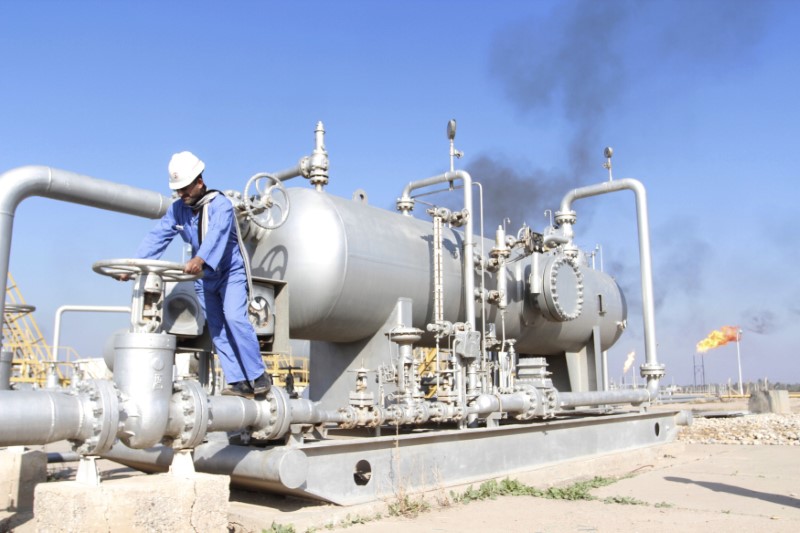
© Reuters. FILE PHOTO: A worker checks the valve of an oil pipe at Nahr Bin Umar oil field north of Basra
Barclays (LON:BARC) bank also cut its 2017 and 2018 Brent forecasts to $52 a barrel for both years from $55 and $57 respectively.
Signs of strong short-term demand helped stem losses.
Gasoline demand tends to increase in the northern hemisphere summer as U.S. drivers take to the road.
Weekly U.S. gasoline demand data "compares favorably to the five-year average and miles driven also continue to grow year-on-year," Bank of America Merrill Lynch (NYSE:BAC) said in a note.
But it also said: "U.S. gasoline demand may have peaked in absolute terms last year," adding that it expected no structural tightness once the peak demand summer season was over.
Crude prices are about 18 percent below their 2017 opening levels despite a deal led by the Organization of the Petroleum Exporting Countries to cut production from January.
OPEC, along with Russia and some other major exporters, has agreed to hold production at about 1.8 million barrels per day (bpd) below levels pumped at the end of last year.
The limits will be maintained until March 2018 in an attempt to drain a global glut, but production elsewhere has risen as OPEC has held back.
U.S. oil production has jumped more than 10 percent over the last year to 9.34 million bpd. Nigeria and Libya, OPEC-members who are exempt from production limits, have also increased output.
"OPEC has yet to address this increase in production," Goldman Sachs (NYSE:GS) said in a note.
Without further cuts by OPEC and other producers or a significant fall in oil inventories or a decline in U.S. drilling, Goldman said crude prices could fall below $40 per barrel.

Monday, 3 July 2017

Oil stages longest rally since 2012, OPEC output may cap gains - Sean Seshadri

Oil prices rose for an eighth day on Monday, their longest rally in over five years after data pointed to moderating U.S. output, but analysts said news of rising OPEC production could temper gains.
Brent crude futures were up 19 cents at $48.96 a barrel by 0842 GMT, having gained 5.2 percent last week in their first weekly gain in six weeks. The eight-day climb is the longest unbroken rally since February 2012.
U.S. crude futures rose 23 cents to $46.27 per barrel, following last week's 7-percent gain.
Drilling activity for new oil production in the United States fell for the first time since January, dropping by two rigs, while U.S. government data showed crude output fell in April for the first time this year. [RIG/U] [EIA/PSM]
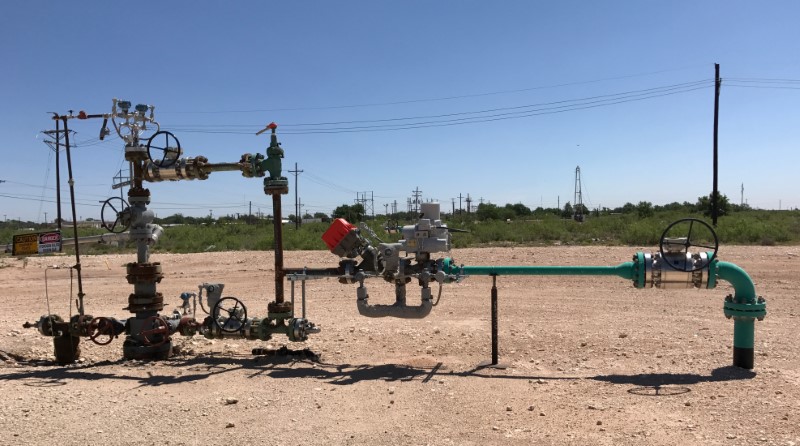
© Reuters. A wellhead is seen at an Occidental Petroleum Corp carbon dioxide enhanced oil recovery project in Hobbs
"Sentiment has turned and I think we should be going up (in price). I don't think it's going to last, but the momentum at the moment is with the bulls," PVM Oil Associates strategist Tamas Varga said.
The drop in U.S. rig count and U.S. Energy Information Administration figures showing output fell by 24,000 barrels per day (bpd) on a monthly basis "sent out a short-term bullish message," he said.
The oil price is still down 14 percent so far this year, as strong global demand has not been enough to absorb rising output from the United States, Nigeria, Libya and other locations, such as the Brazil and the North Sea.
Despite the dip in U.S. drilling, the total rig count was still more than double the 341 rigs in the same week a year ago, according to energy services firm Baker Hughes Inc.
Oil markets remain oversupplied as output from the Organization of the Petroleum Exporting Countries hit a 2017 high.
June OPEC production was up by 280,000 bpd at 32.72 million bpd, according to a Reuters survey, despite the group's pledge to hold back output.
"To put that in context, that is nearly a quarter of the 1.2 million barrels (per day) OPEC agreed to cut," said Greg McKenna, chief market strategist at AxiTrader, adding the rise came from Nigeria and Libya, which are exempted from the cuts.
Last week, money managers added to their bets against a sustained rise in the oil price. U.S. data showed investors increased short holdings of crude futures and options to close at their highest in a year. 

Tuesday, 27 June 2017

Oil up for fourth day on short-covering, supply glut caps gains - Sean Seshadri

Oil prices rose for a fourth consecutive session on Tuesday as investors covered short positions, although worries over a persistent global supply glut still lingered.
Brent crude futures (LCOc1), the international benchmark for oil prices, gained 35 cents, or 0.7 percent, to $46.18 per barrel by 0715 GMT.
U.S. West Texas Intermediate (WTI) crude futures (CLc1) were up 30 cents, or 0.7 percent, at $43.68 per barrel.
The gains mean the market is up slightly so far this week, after spending much of the last month in negative territory.
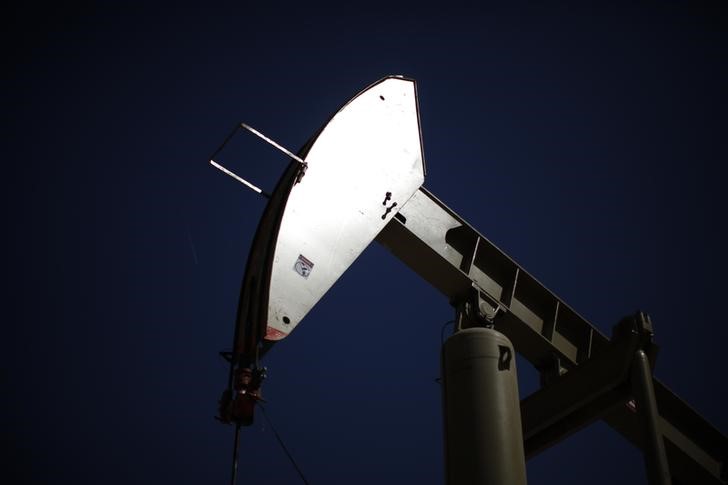
© Reuters. A pumpjack drills for oil in the Monterey Shale
"Oil may be close to the bottom but badly damaged sentiment and a rising (U.S.) rig count will dent the recovery," U.S. bank Citi said on Tuesday.
The Organization of the Petroleum Exporting Countries (OPEC) and its partners have been trying to reduce a global crude glut with production cuts. OPEC nations and 11 other exporters agreed in May to extend cuts of 1.8 million barrels per day (bpd) until March 2018.
Despite the cuts, which started in January, markets remain well supplied due to rising output elsewhere.
OPEC members Nigeria and Libya are exempt from the cuts and have raised production. OPEC member Iran was also allowed a small increase to recover market share lost under Western sanctions over its nuclear programme.
U.S. shale oil output has risen about 10 percent since last year to 9.4 million bpd , with the number of U.S. oil rigs in operation at the highest in more than three years. [RIG/U]
"Traders are also looking ahead to the EIA Energy Conference in Washington, where U.S. shale oil producers are expected to give their view of current market conditions," ANZ bank said.
Analysts at Bank of America-Merrill Lynch said demand was not growing quickly enough to absorb output, especially since imports in Asia are stuttering.
A fuel glut in China, a hangover from demonetisation in India, and an ageing, declining population in Japan are holding back crude oil demand growth in three of the world's top four oil buyers.

Thursday, 22 June 2017

Turkish exports to Qatar triple during Gulf crisis: trade minister - Sean Seshadri

Turkish exports to Qatar have tripled from their normal levels to $32.5 million since four Arab countries began boycotting the Gulf state on June 5, Turkey's Customs and Trade Minister Bulent Tufenkci said late on Thursday.
Saudi Arabia, the United Arab Emirates (UAE), Egypt and Bahrain accuse Qatar of funding terrorism, fomenting regional instability and cosying up to revolutionary theocracy Iran. Qatar has denied the accusations.
They have sent Doha a list of 13 demands including closing Al Jazeera television, reducing ties to their regional adversary Iran and closing a Turkish military base in Qatar, an official of one of the four countries told Reuters.
© Reuters. Buildings are seen on a coast line in Doha
Turkey, which has long tried to play the role of regional mediator, has backed Qatar in the dispute but is also wary of upsetting its other allies, including Saudi Arabia.
"Since June 5 exports to Qatar have amounted to $32.5 million. Of this $12.5 million is food. This figure is three times the normal level," Tufenkci told reporters at a Ramadan fast-breaking dinner on Thursday evening.
Turkey has sent more than 100 cargo planes of supplies to Qatar but Economy Minister Nihat Zeybekci has said it was not sustainable to maintain supplies through an air lift.
On Thursday, Turkey sent its first ship carrying food to Qatar and dispatched a small contingent of soldiers and armored vehicles there, while President Tayyip Erdogan spoke with Saudi Arabia's leaders on calming tension in the region.
Turkey fast-tracked legislation on June 7 to allow more troops to be deployed to a military base in Qatar that houses Turkish soldiers under an agreement signed in 2014.

Wednesday, 21 June 2017

Gold tick higher but holds near 5-week lows on Fed rate hike views - Sean Seshadri

Gold prices edge higher in European morning trade on Wednesday, but stayed near the lowest level in around five weeks as investors worried about future Federal Reserve rate hikes.
The precious metal is sensitive to moves in U.S. rates, which lift the opportunity cost of holding non-yielding assets such as bullion.
Comex gold futures were at $1,247.85 a troy ounce by 3:35AM ET (0735GMT), up $4.25, or around 0.3%. Gold prices notched a second-straight decline on Tuesday after falling to its lowest since May 17 at $1,242.40.
Also on the Comex, silver futures were up 2.2 cents, or roughly 0.1%, to $16.43 a troy ounce, after hitting its lowest since May 12 at $16.36 a day earlier.
© Reuters.  Gold tick higher but holds near 5-week lows
Market expectations for another Fed rate hike later this year have improved in wake of hawkish comments made by influential New York Fed Chief William Dudley earlier this week.
Dudley gave an upbeat assessment of the economy on Monday and warned against the central bank taking a pause in the tightening cycle. He added that U.S. inflation is a bit low but should rise alongside wages as the labor market continues to improve, allowing the Fed to continue gradually tightening U.S. monetary policy.
The remarks echoed similar comments made by Fed Chair Janet Yellen in last week’s press conference after the central bank hiked rates for the second time this year and maintained plans to go ahead with another rate hike by year-end.
The Fed also provided greater detail about how it plans to reduce its massive $4.5 trillion balance sheet.
Futures traders are pricing in around a 20% chance of a hike at the Fed's September meeting, according to Investing.com’s Fed Rate Monitor Tool. Odds of a December increase was seen at about 40%.
Market players will focus on U.S. housing data due later in the global day to gauge if a recent downtick in consumer spending and inflation is translating into lower home prices and slack in sales.
The National Association of Realtors is to release data on existing home sales for May at 10:00AM ET (1400GMT) amid forecasts for a decline of 0.7% to 5.55 million.
Among other precious metals, platinum was down 0.3% at $918.80, while palladium dipped 0.5% to $863.15 an ounce.